Biotechnology is possible, The valley of chicken/egg, SBIRs
My first winter back in Massachusetts after five years in California was a brutal one. During the winter the oppressive cold, dark, and snow eliminates places other than work or home. For the last six months, I’ve been the first person walking into the lab, often the last out, having missed sunlight on both sides of the day. At my most self-indulgent moments I’m listening to “The Distance” by Cake, missing my girlfriend on hour 11 at the bench.
But now the snow has melted, I’ve thrown some grass seed down in the small yard next to my apartment, small birds ate many, larger birds pushed the small birds out, grass grew, I made some planters which are feeding the local squirrels, and it’s time to get my bearings.
How are things going with Olek in startup world?
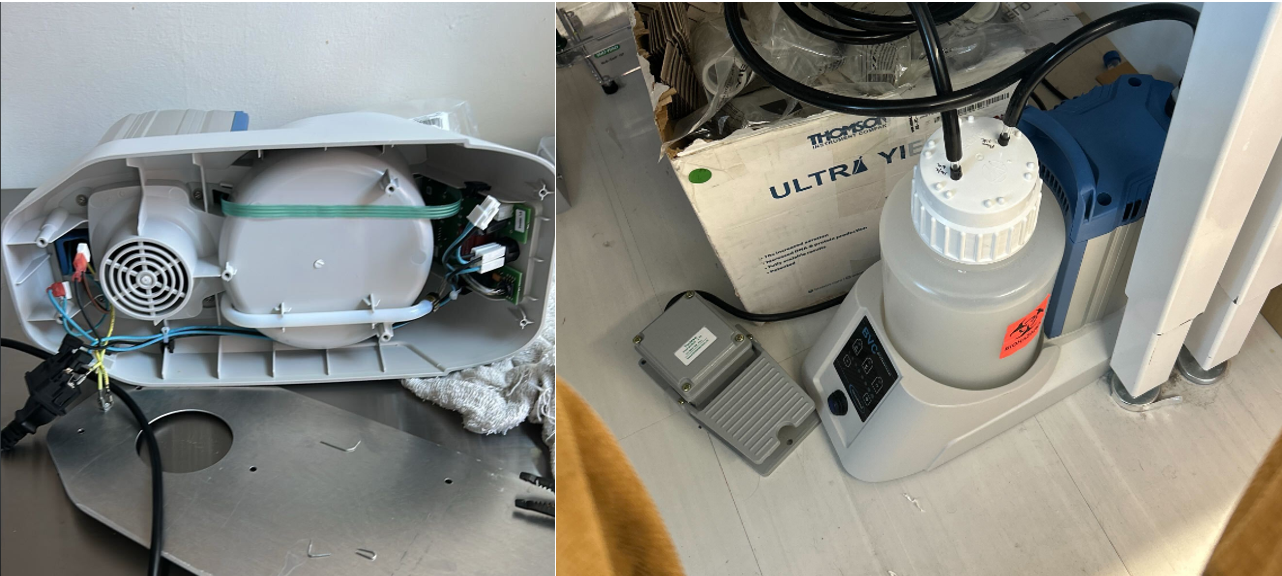
So, I posted like 6 months ago that I have 4 months of money. Well, 4 turned to 5, turned to 6, for reasons detailed below. It has been a bootstrapped slog. When I saw my startup space was tossing out some $4,000 lab vacuums (useful for sucking up liquids, filtering media, washing cells, preparing DNA, etc) I asked to snag one with a broken sensor. Gutted it and bypassed the control board so it turns on when it’s plugged in and attached a foot switch to control power. Voila, shareholder value.
The article I posted about my plasmid cloning technique turned out to be critical to making it through this period; as I’ve saved around $7,000 in building plasmids. Software expenses are falling; as someone just vibe coded a clone of a software that costs a few grand a year. My twin sister generously invested a SAFE to bridge.
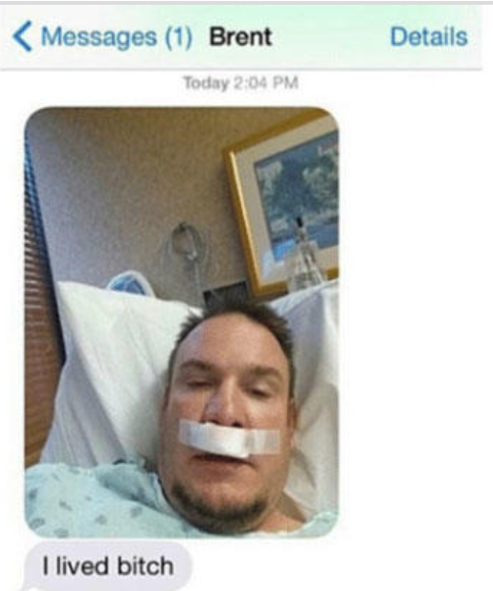
In the end; I survived.
Conviction: This word is thrown around a ton in startups / VC. In technology startups, the thing you’re working on is often incomprehensible to investors, who likely have only a high level understanding of what you’re working on. Conviction describes how sure you are that you have something special and worth investing in. A good scientist is conservative by nature. A discovery must be picked apart in 5 different ways to take it from 60% likely to be true, to 95% likely to be true. And still… there’s that 5%.
You learn to be detached from your work, even if it’s spectacular. Actual conviction is subtle in that you precisely understand the contours and limitations of your technology. The new things you know it can do right now, and the next ten it might, with appropriately weighted confidence and upside. For me, this has been a hard lesson to learn: at this stage, scientific precision is necessary but insufficient. Vibes, trust, timing, and connections matter more than scientists are trained to admit.
__________________________________________________________________________
Why I have conviction: The first problem I’m attacking is: how to coax organisms into secreting a lot of a desired protein. This protein might be valuable as a medicine, manufacturing component, food, pesticide, etc. People commonly express skepticism at building a company in this niche. Currently, Gingko is the biggest company built with this purpose, though they are winding down that function, never really having cracked the code. They spent millions in R&D per protein, most often taking a loss, and are now facing price competition from Asia and Eastern Europe. The difficulty of this market has made it hard to invest in and hard to scale. Gingko used to do $200M/yr in revenue but their struggles lessened investor appetite in the space. But, but.
New technology radically altering the shape of markets and flows of material has happened throughout human history. It is what America has always relied on in competition with the world, and what has driven all major societal change over the last thousand years. People seem locked into a way of thinking that is incrementalistic, as if I’m suggesting that I can compete by cutting price 10%. I wouldn’t have started a company in this space if that was my value prop. Customer discovery through a spark I-Corps program and engagement with current players in the space have sharpened my vision and dramatically increased my confidence that there is a big unmet need here.
Current biology dogma conceives of cells as composed of proteins passing around molecules, precisely turning genes on and off in response to stimuli. Complex and precise programs control the flows of energy and resources. Cells spit out signals and coordinate mutualism. It is all very orderly, like a little machine.
My bet is that cells are less like precisely engineered machines and more like noisy, crowded systems wherein the core property is surviving imprecision. If that is true, then the right evolutionary system can find surprising ways through problems that look impossible by design.
Cells are chock full of proteins, DNA, RNA, lipids, carbohydrates. All are constantly bouncing into each other, accidentally doing stuff they weren’t “meant’ to. Imprecision is inevitable in a space where thousands of differently shaped molecules are touching all the time. Molecules slip across pathways in ways that should be fatal. Disruptions alter the context and physical realities a cell inhabits. A cell is a chaotic place whose principal purpose is to deal with imprecision. Biology has optimized to enable robustness, rather than optimized to precisely manage resources. I think this is a more accurate conception of biology.
This was the bet I made in 2023 when I started work on my platform. I’m now quite certain the take is correct. For example, I used my system to discover/evolve E.coli genes which stabilize an unstable gene. 42 different genes evolved to solve the problem, including genes with no known function, Smg, YchJ, YaeP. The original genes had no activity, but within just a couple mutations they solve the disturbance. In a coda to my inspiration for this work, a flagellar subunit FlgN, evolved to prevent degradation in my model system. The high throughput results haven’t been published yet, but they are a wild result that few will understand.
One such practical application of this is to enable production of toxic proteins. Many things we might want to make, like a modernized fully in vivo version of chemo drugs, enzymes which do a valuable reaction, proteins we want to use as antigens for discovery, are toxic to cells. That is a problem that I know I can solve, as we’ve already published on it.
The bet I’ve made is that I have a technology exploiting a new understanding of biology which will radically change what’s possible. This case will be a lot easier to make in a few months.
The valley of chicken/egg
Getting a company like this off the ground is a series of interlaced chicken/egg problems. Chicken/egg valley is the place where every prerequisite for building the company requires another prerequisite you do not yet have.
Potential investors want you to have buttoned up your intellectual property. To button up IP needs money and lawyers, ideally good ones, who are very expensive. Expensive lawyers will sometimes defer payments, but they want you to have proof that they’ll get their money’s worth within a reasonable time, which means investors. Investors like to invest in good teams. Good teams cost money. Potential customers are interested in what you think you can do but need proof it’s a good use of their time, which costs money to generate. All of these problems can be solved with scrappiness, which costs time.
My approach to getting past this stage was to light the fuse without major investment and try to produce either a chicken or egg through force of will. Being the only FTE gave me wiggle room because I could cut my own pay to keep the lights on if a chicken is on the horizon, but the path to that chicken is still paved with money. I took on consulting work to cover expenses and build relationships and I lined up applications for as many 10-15% success rate grant programs as I could, hoping one would hit.
One solution to this is a government program called Small Business Innovation Research (SBIR). These are government eggs which fund R&D to help you bring a chicken to hatch. Early money lets you hire one more person, and cover research costs for a year. If successful in the science, and good progress on commercialization is made, you’re eligible for a bigger grant. The application is long and you have to make accounts on 5 different poorly linked government websites over months to get it done. I applied for one of these in July ‘25, almost a year ago. A few months later the program lost authorization for six months and the government shut down for a month and a half. Normally it is reauthorized every year but this year the small business committee in congress decided the rules needed some changes.
The program has two very different constituencies: founders trying to cross the valley of chicken/egg, and organizations that subsist entirely off of SBIRs. Some companies are astonishingly good at winning grants while producing little that ever becomes a real product. That is bad for taxpayers, bad for serious founders, and bad for the credibility of the program.
But reforming that system is politically hard because the money is defended by people who benefit from the status quo. This year, that fight helped push the program into months of uncertainty. A random government program most people have never heard of lapsing may not seem like a big deal, but to me, the money could be the difference between bringing an innovative technology to bear, and that dying on the vine.
____________________________________________________________________
Well, anyway the program was reauthorized as of 4/13. My company was just funded through an NSF Phase I SBIR (unbiased opinion is NSF is the best SBIR program). Finally, an egg.
In that time, I’ve had a rotating cast of 7 people who have chipped in, some more seriously than others. The SBIR is a huge break for Synlibris. Thank you to the rotating cast of characters who have contributed. Thank you to Astral Codex Ten for their early belief in the vision; and my sister for her belief in me. Thank you to my NSF Program Director, Erik Pierstorff whose guidance and understanding of the vision were enabling. I am grateful. Most of all I am grateful to my girlfriend Reilly, who has kept me alive and (mostly) sane for the last few months and tolerated many 13 hour days.
Now I’m looking for another scientist who wants to build on a bleeding-edge high-throughput evolution system, and I’m looking for commercial advisors with scar tissue in biomanufacturing, protein production, pharma discovery tools, or industrial biotech.
Quick note 8/16: As of July I have gotten access to the funds from NSF. Having enough money to buy the reagents I need to build out and optimize systems without a second thought has made a world of difference. Having the lab fully operational and groundwork in basic protocols laid by the time the money hit was hugely helpful and I am making pretty ridiculous progress in advancing the goals of the company. Figuring timing of hiring has been hard; as it would slow me down to train someone; especially as a lot of the work right now won’t need to be repeated. There’s some pretty clear tech milestones to clear over the next 2-3 months, and I expect that those will open a lot of doors. I hope to publish a whitepaper on what I’m building in the next 6 months or so after patents are filed and tidy reports are written up.
Onwards.