$50k, A Bench, and 4 Months to Prove It
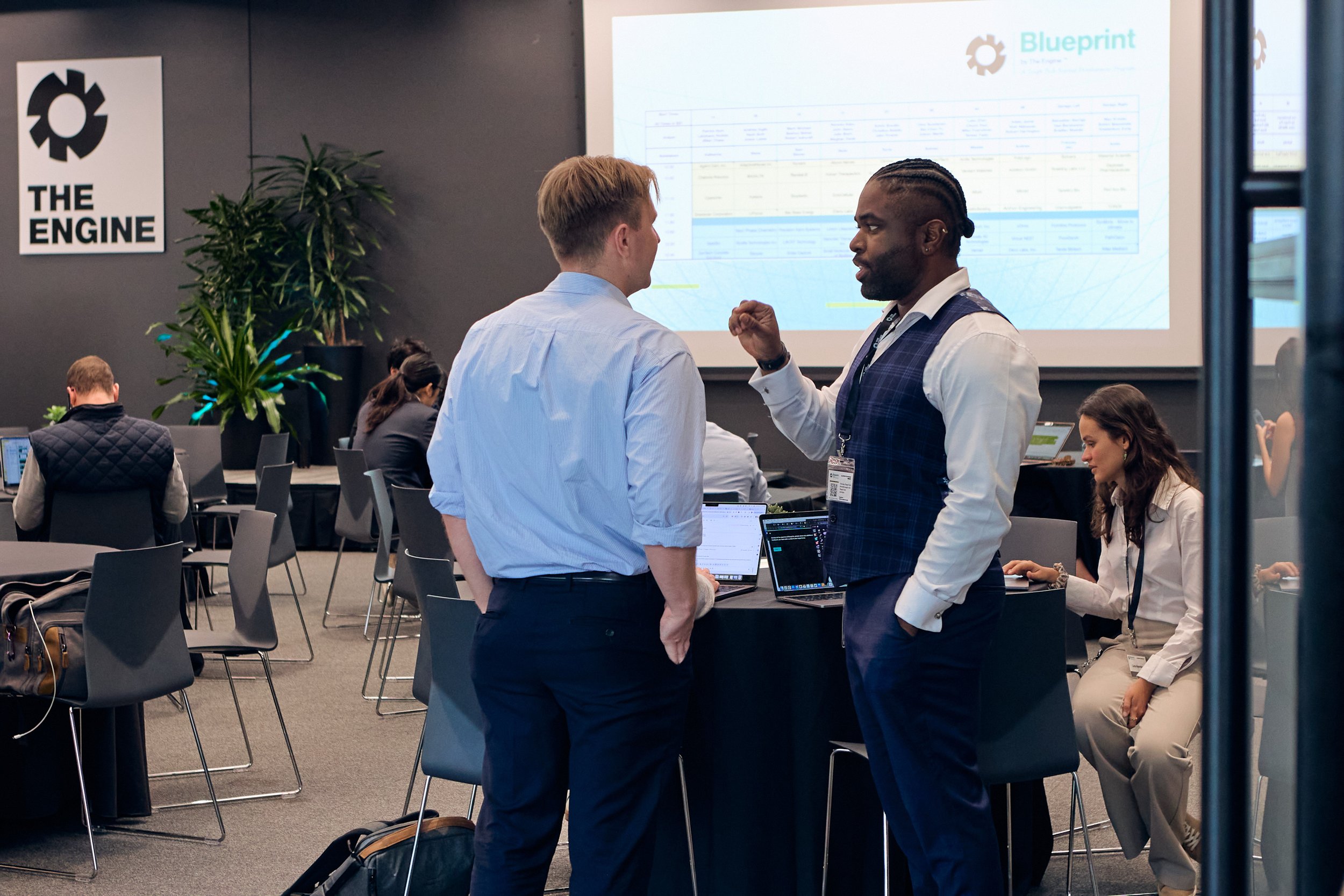
As of 12/1, my company Synlibris is at a bench in The Engine MIT.
While running through the stellar programming at Blueprint (run by The Engine), a couple doors opened up. First was the SAFE from ACX, $50k with few strings attached, to develop the company. Second was some consulting work for K2 Tx. This subsidizes the cost of renting a bench, and of the multitude molecular bio reagents which every lab orders once in its lifespan, while allowing me to contribute my expertise with OrthoRep to their state-of-the-art therapeutic development platform. I am grateful for the trust of both ACX and K2.
Starting a biology company on $50k is unusual, as far as I know. Originally, I had hoped that an SBIR would fund this first stage, but a government shutdown and an ongoing lapse in program authorization leaves me with no idea when I’ll hear anything about that decision. As the inventor of the platform I’m building off, I know that it is a powerful approach and there are low hanging fruit to pick. I need data that is legible to outside eyes and advances me to the stage of developing a commercially valuable product.
The core thesis powering Synlibris is that the traditional concept of a gene is fundamentally limited. Bioengineering remains stuck in a headspace where a gene is defined as a protein with a single, well-defined function. My conception is that proteins can fill multiple functions, picking up and dropping activity with single mutations that are invisible if not measured in the right context.
Most recognize that exploiting biological randomness is productive, but current methods are slow and not scalable. My method is fast, well-controlled, and unlocks solutions that have remained out of reach. (For the deep dive, check out my PhD thesis).
I am convinced that exploiting this property of biology will be transformative for the way bioengineering is done. We don’t have enough money to build a full company but should have enough to find out how easy it will be.
What are we actually doing, though?
The utility of bioengineering in transforming the material world hinges on its economic advantage. Biomanufacturing is too limited and too expensive. We are changing that. Success would look like a 10x reduction in the cost of a multitude of proteins, turning tedious optimization processes that take years into weeks, and making long-dreamed applications of biology real.
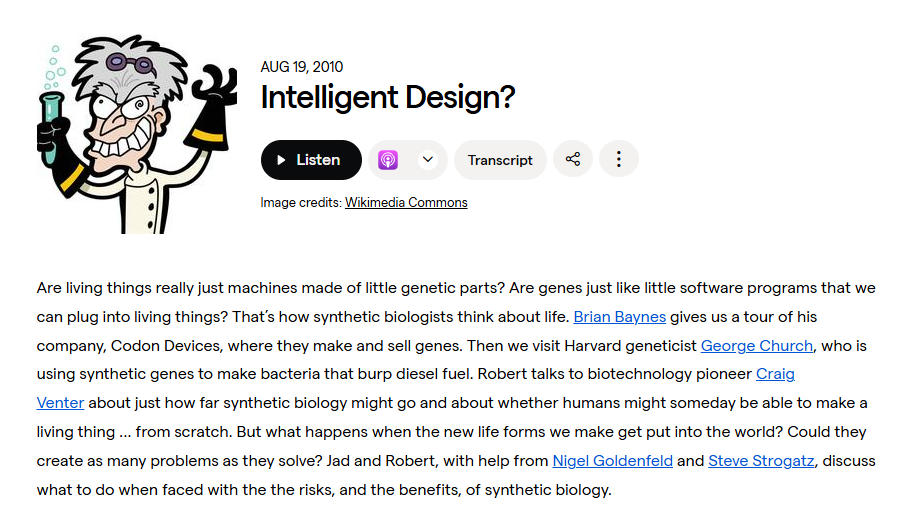
I started down the bioengineering path after listening to a podcast in high school featuring George Church talking about lakes of microbes producing the gas that goes in our cars. No bio-revolution on this scale has come close to being realized.
Current efforts to replace animal-derived proteins in food and medicine are coming close to entering the market but often need another halving of cost to compete with incumbent, well-developed pipelines. Success would make cheaper, higher-quality food. Vaccine manufacturing in microbes would allow for greater access in developing nations, and rapid optimization would enable unimagined pandemic readiness. Economic production of tricky bioremediation proteins would enable new recycling streams and the breakdown of “forever chemicals.” For drugs like Factor VIII, which cost patients $400k/yr because of their manufacturing complexity, we could cut costs by 90%. Enabling robust manufacturing in easy-to-grow organisms with easy purification will allow for decentralization and the production of medicines in remote environments.
Over the past few months, I’ve been running through customer discovery in precision fermentation, biocatalysis, molecular biology reagents, and biologics. I am grateful for the willingness of people to talk to me and offer advice. You learn to read people’s reactions: some seem nervous, viewing you as a potential problem; some are skeptical, simply not believing you; and some seem excited, viewing you as potentially useful. Learning more about how optimization in this space is currently done has made me confident that it’s ripe for an overhaul. Talking to the right person who turns an abstract problem into something concise and concrete has been one of the best parts of this process.
Structuring the business to succeed will be a challenge, and I’ve been working with some potential co-founders whose job it would be to do that. Solving the path to entering enough markets and generating enough economic value to grow into a self-sustaining, big company will be a big job.
I’ve also been talking to monied people, VCs, government representatives, and angel investors. Our technology is exciting enough that there has been investment interest, but as a company, we are being careful to take money with strings attached. I see no glory in a big raise and short-term, high-risk incentives being put on that could damage our path in building out a system with maximum impact. I’ve learned that you don’t really need to follow the tech path of crafting a VC-titillating narrative. Frankly, the technology is complicated, and understanding why it could be disruptive relies on understanding the underlying value of reimagining the structure of biology. Navigating the capital environment is opaque, and my feeling is it will be best to scrape it together piece by piece. Value now, then build, then big later.
So, I have a bench now. I just placed 130 orders for the reagents, consumables, and light equipment I need to get started. I’ve learned to navigate accounting and payroll. Over the next couple of weeks, I start cloning and running experiments. I’m locked in for 4 months, within which I hope to hear something about an SBIR and a fellowship I applied for.
At the end of that, we will know whether I have a company.